Rail Maze Color Puzzle
Puzzle Strategy Color Matching Logic Family
Rail Maze Color Puzzle
102
Developer: Wizard Core Creations
Published: 1747324800
Updated: 2026-10-01

Reviews

Rail Maze Color Puzzle builds its challenge from a single clear rule: the train only moves on matching-colored track. That constraint turns each junction into a small planning decision, and the gradual difficulty across more than 30 mazes keeps the game from feeling repetitive. The lack of time limits and the non-violent presentation make it accessible to children and adults alike, though players seeking fast action or complex systems may find the pace too gentle.

Description

Matching Colors at Every Junction

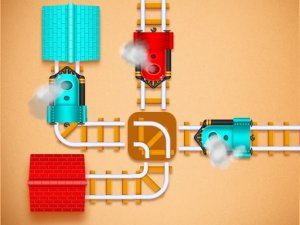
The train only travels on track that shares its color. At each junction, you tap or click a switch to change the rail's color. If the active path color does not match the train, the run ends with a colorful burst and you try again. That single rule drives every decision: read the junction, predict which color the train needs next, and switch before it arrives. The challenge comes from planning several junctions ahead rather than reacting late.

Thirty-Plus Mazes with a Gentle Ramp

Rail Maze Color Puzzle contains more than 30 puzzles. Early mazes introduce one color change at a time, then later layouts combine multiple junctions and longer routes. Because there are no time limits, you can study each board, trace the path mentally, and adjust switches without pressure. The difficulty curve is built into the maze design, not into timers or score penalties, so the game stays approachable for children while still giving adults something to think through.

Feedback, Pace, and Who It Suits

Animations and sound effects mark each switch and each completed run, giving clear feedback without harsh penalties. The visual style uses bright, distinct colors so rail sections are easy to tell apart, which matters when several tracks cross. With simple tap or click controls and no fail state beyond retrying the puzzle, the game fits short breaks as well as longer sessions. It is aimed at families, younger players building color recognition, and adults who want a quiet logic exercise.


Editorial Notes

Compatibility

💻 Desktop | 📱 Mobile | 📟 Tablet
– All supported · Best with Chrome or Safari

Faq

What happens if the train reaches a rail that does not match its color?
The run ends with a colorful burst, and you can retry the puzzle. There is no penalty beyond restarting the attempt, so you are free to experiment with switch orders and learn the correct sequence through trial and error.
Does Rail Maze Color Puzzle have a time limit or move limit?
No. The game is designed without time limits, so you can observe each junction and plan your switches at whatever pace you prefer. This makes it suitable for players who want a relaxed puzzle session rather than a timed challenge.
How many puzzles are included in Rail Maze Color Puzzle?
The game includes more than 30 puzzles. The complexity increases gradually across them, starting with simpler layouts and building toward mazes that require planning across several junctions. The exact count beyond 30 is not specified in the available description.
Is Rail Maze Color Puzzle suitable for young children?
It is designed to be family-friendly and non-violent, with simple tap or click controls and clear visual cues. The color-matching rule is easy to understand, and the absence of timers reduces pressure. Adults can also find later puzzles challenging as the layouts grow more complex.
What skills does Rail Maze Color Puzzle practice?
The core mechanic exercises color recognition, focus, and problem-solving. Players must identify which color each rail section needs, then sequence their switches so the train always travels on matching track. These skills scale naturally as the maze layouts become more intricate.
Can I play Rail Maze Color Puzzle in short sessions?
Yes. Because there are no time limits and each puzzle is self-contained, you can complete one maze in a short break or work through several in a longer sitting. Progress is not tied to real-time pressure, so stopping and returning later is straightforward.