World Rotation Puzzle Challenge
Reviews
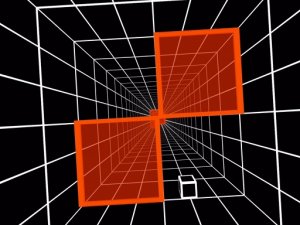
World Rotation Puzzle Challenge stands out by making the environment the controller. Instead of steering a cube, you rotate the entire world around it, which forces you to think about timing and spatial relationships differently. The no-brakes rule adds constant pressure, and the gradually complex obstacle patterns keep the challenge fresh. It is best suited for players who enjoy logic puzzles and quick reactions. The main limitation is that the core mechanic may feel repetitive after long sessions, but short bursts remain engaging.
Description
The Core Twist: Rotating the World
Most navigation puzzles put you in direct control of a character or vehicle. Here, the cube moves forward on its own, and your only input is rotating the entire world around it. That single mechanic changes how you think about timing. A left tilt might guide the cube around a barrier, but rotate too early or too late and you collide. Because the cube never stops, every rotation is a commitment.
Obstacle Patterns and Difficulty Curve
Early levels use simple, spaced-out barriers that let you learn the rotation timing without much pressure. As you progress, obstacle sequences become denser and require planning two or three moves ahead. The challenge shifts from reaction to anticipation. You are not just avoiding what is on screen; you are reading the pattern and predicting where the next gap will be.
Controls and Accessibility
One-button or touch controls keep the barrier to entry low. You can play with a mouse or a touchscreen, rotating left or right with a simple input. That simplicity makes the game approachable for younger players or anyone who wants a quick mental workout. The difficulty comes from the level design, not from complicated inputs.
Who It Suits and How to Improve
If you enjoy logic puzzles that test spatial reasoning and quick decisions, this fits well. The lack of brakes means you cannot pause to think mid-level, so regular practice helps you internalize obstacle patterns. Short sessions work fine, but repeated attempts on a single layout often yield the best improvement. The colorful visuals keep the experience light even when the timing gets tight.




Editorial Notes