Invader Zim Jigsaw Puzzle
Reviews
Invader Zim Jigsaw Puzzle sticks to one job and does it clearly: scrambled pieces, a transparent outline, and mouse-driven placement. The adjustable difficulty is the main lever, letting the same puzzle serve a child and an adult. The lack of timers or penalties keeps sessions calm, and the series imagery gives the completed scenes some personality. The trade-off is that the core loop is conventional jigsaw assembly, so players seeking new mechanics will not find them here.
Description
Rebuilding Scenes Piece by Piece
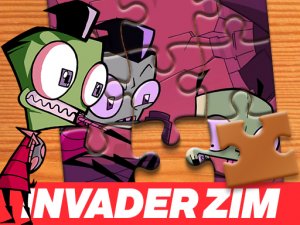
Invader Zim Jigsaw Puzzle takes the visual style of the animated series and turns it into a drag-and-drop assembly task. Each puzzle begins with a scrambled set of pieces and a transparent outline showing where they belong. Your job is to move every piece into its correct spot until the full image is restored. The outline removes guesswork about the final layout, so attention stays on matching shapes and colors rather than memorizing the picture.
Difficulty Without Pressure
A difficulty selector lets you choose how many pieces to work with before each round. That single decision changes how long a puzzle takes and how much pattern recognition is required. There are no timers, penalties, or fail states. You can adjust the difficulty between attempts, which makes the game approachable for younger players while still giving experienced jigsaw fans a reason to pick a harder setting.
Controls and Interaction
Everything is handled with a mouse. Click a piece, drag it across the screen, and release it over the transparent outline. Pieces that fit snap into place, and the remaining pile shrinks as you progress. The drag-and-drop response is smooth, so misplaced drops are easy to correct. No keyboard input or prior puzzle experience is needed.
Who It Suits
The imagery is drawn from the Invader Zim universe, and the game is designed to be family-safe with no violent or inappropriate content. Because there is no clock, it works well for short breaks or longer sessions. Replay value comes from restarting at a different difficulty or replaying the same image to improve your completion time.





Editorial Notes