Ocean Hidden Treasure Puzzle
Reviews
Ocean Hidden Treasure Puzzle delivers exactly what its name suggests: a straightforward search for concealed items across six ocean-themed images. Its strengths are accessibility and a relaxed pace—no timers, no penalties, and controls that work equally well on desktop and mobile. The main limitation is scope: six scenes with nine items each is a modest amount of content, and the game does not appear to include hints, alternate modes, or randomized placement. It suits players who want a short, gentle observation exercise rather than a lengthy or competitive challenge.
Description
What You're Looking For
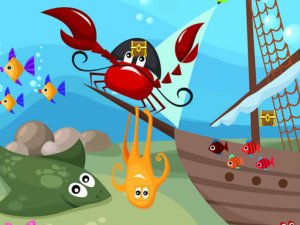
Each of the six scenes in Ocean Hidden Treasure Puzzle contains exactly nine hidden treasures. The scenes are underwater environments filled with visual detail—coral reefs, sunken ships, and similar ocean settings. Your task is to scan each image and click or tap on objects you believe are treasures. The game only advances when all nine items in the current scene have been found. There are no timers, no penalties for wrong clicks, and no pressure to rush. The challenge comes entirely from observation: distinguishing a deliberately concealed item from the surrounding artwork.
Scene Variety and Progression
The six images are distinct from one another, each with its own arrangement of hidden items. Because every scene uses a different set of treasures, finding items in one image does not train you for the next—you must re-examine each new environment from scratch. Progression is linear: complete one scene by finding all nine treasures, then move to the next. The game ends when all six scenes are cleared. This structure gives the game a clear finish line while allowing players to stop and resume between scenes without losing progress within a scene.
Controls and Accessibility
Controls are limited to pointing and clicking with a mouse or tapping with a finger on a touchscreen. The same input method works on desktop and mobile, so the game does not require a keyboard or complex gestures. This simplicity makes it approachable for younger players, older players, or anyone who prefers low-input games. The absence of time limits and failure states means the game can be played in short sessions or extended ones without consequence. It is designed to be a calm, self-paced activity rather than a test of reflexes or speed.





Editorial Notes