Luminous Match Puzzle
Reviews
Luminous Match Puzzle stands out for its restraint. The tap limit forces deliberate play, and the dark, minimal interface keeps attention on the board. Early levels teach the chain mechanic gently, while later boards introduce more colors and denser layouts that demand real foresight. It suits players who enjoy logic puzzles without time pressure. The main limitation is that the input does not describe additional modes or features beyond the core loop, so variety depends entirely on level design.
Description
The Chain-Reaction Core
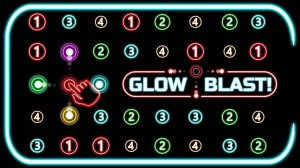
Every board in Luminous Match Puzzle is filled with small, glowing circles in distinct colors. Tapping any dot removes it and immediately clears all directly adjacent dots that share its color. Because those removals can connect new groups, a single tap often sets off a cascade that clears a large portion of the board. The real work is scanning for clusters before you tap, then judging how the empty space will reshape the remaining dots.
Tap Limits and Sequential Thinking
Each level gives you a fixed number of taps. That constraint turns every move into a trade-off: remove a small cluster now to set up a bigger chain later, or take the direct route and hope it leaves a clean board. The game never pressures you with a timer, so you can rotate the board mentally and test different opening moves. This design rewards pattern recognition and the ability to think several steps ahead.
Board Complexity and Progression
Early levels use simple arrangements and few colors, acting as a tutorial for the chain mechanic. As you advance, boards introduce more colors and denser placements, which makes adjacent groups harder to spot and sequences more demanding. Some layouts require clearing the entire field in one continuous chain, pushing you to optimize rather than just survive. The difficulty climbs steadily, so skills build gradually instead of spiking.
Visual Clarity and Focus
A dark background makes the luminous dots stand out, and each chain reaction produces a brief visual pulse that confirms what was removed. The interface stays minimal, with no clutter competing for attention. That restraint matters during longer sessions, when eye strain and distraction would otherwise break concentration.





Editorial Notes