Digit Path Arithmetic Puzzle
Reviews
Digit Path Arithmetic Puzzle stands out for its focus on order of operations and route planning rather than speed. The absence of timers makes it accessible to players who prefer to think through each move, while the move limits and later negative numbers keep the challenge meaningful. It suits children practicing mental arithmetic and adults looking for a low-pressure logic exercise. The main limitation is that the core loop may feel repetitive for players seeking variety beyond arithmetic puzzles.
Description
Grid Navigation and Operation Tiles
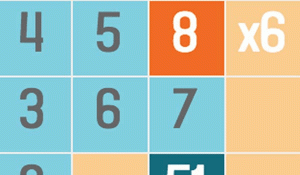
Each puzzle begins with a starting number placed on a board scattered with operation tiles. You slide that number in four directions, and every tile you land on modifies its value: a +5 tile adds five, a /2 tile halves it, and some tiles combine multiple operations. The order in which you encounter these tiles determines the final result, so the route matters as much as the operations themselves. Your goal is to land on the target tile with the correct final value.
Planning Under Move Limits
Puzzles impose a limited number of moves, which forces you to think several steps ahead. Overshooting or undershooting the target is easy if you apply operations in the wrong sequence. You need to consider which operation to apply first, which to save for later, and whether a longer path with more favorable tiles beats a shorter one. This tension between efficiency and accuracy is the core of the challenge.
Progression and Puzzle Variety
Early boards are small and contain few operation tiles, giving you room to grasp the basic slide-and-apply mechanic. As you advance, boards grow larger and more complex, with multiple paths and intertwined operation sequences. Later puzzles introduce negative numbers and may require reaching the target in an exact number of moves, which adds a layer of precision to your planning.
Interface and Learning Curve
The interface is clean and uncluttered, with clear tile labels and a prominent target display. Each move triggers immediate visual feedback showing how the number changes, so you can see whether you are on track. A hint system offers subtle guidance on difficult puzzles without revealing the solution. There are no timers, so you can think at your own pace. The game reinforces arithmetic skills through repeated practice, making it suitable for children improving mental math and adults who enjoy logical challenges.

Editorial Notes