Car Image Sliding Challenge
Reviews
Car Image Sliding Challenge keeps its scope tight: three car photographs, a sliding tile mechanic, and a difficulty setting that changes the grid size. That restraint works in its favor. There is no timer, no penalty, and no download, so it suits players who want a quiet logic exercise rather than a competitive challenge. The main limitation is variety, since three images can only sustain so much replay value.
Description
Rebuilding Cars One Tile at a Time
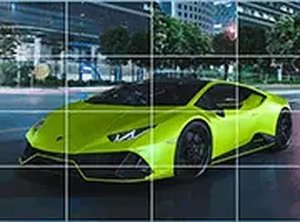
Each puzzle starts as a scrambled grid of square tiles cut from a single automotive photograph. One slot in the grid is empty, and your only move is to slide a neighboring tile into that gap. Every shift changes which tile sits next to the hole, so the order of your moves matters as much as the moves themselves. The goal is to rearrange the tiles until the original car photo is whole again.
Three Images, Multiple Grid Sizes
The game includes three distinct car photographs, each showing a different vehicle design. Before you begin, you choose a difficulty level that determines how many pieces the picture is split into. A smaller grid means fewer tiles and a quicker solve; a larger grid produces a finer split and a longer, more demanding sequence of moves. Because any image can be played at any difficulty, the same photo can be replayed with a harder configuration for a different challenge.
Reading the Picture as a Guide
Color, shape, and detail inside the photograph are the main tools for solving. Recognizable features such as body lines, wheels, and background elements tell you where a tile belongs, which helps you plan several moves ahead instead of shuffling blindly. The interface stays minimal so the image itself remains the focus, and the visual payoff comes gradually as the car takes shape.
Controls and Relaxed Pacing
Tiles are moved by clicking or tapping a piece and dragging it toward the empty space, with support for both touchscreens and mouse input. A full-screen option removes browser clutter, and no download or installation is needed. There are no timers, penalties, or competitive pressure, so you can pause, leave, and return to a puzzle whenever you like.





Editorial Notes