Global Flag Recall Puzzle
Reviews
Global Flag Recall Puzzle turns a classic memory game into a gentle geography lesson. The gradual difficulty increase keeps it accessible for kids while still engaging for adults. The clean, uncluttered interface and lack of timers make it a stress-free way to learn flags from around the world. Ideal for classrooms or quiet evenings at home.
Description
Core Gameplay Loop
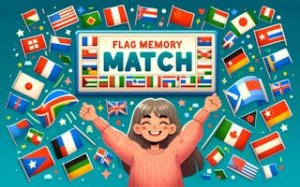
At its heart, this is a card-matching puzzle where each tile displays a distinct national flag. Players turn over two cards per turn, aiming to uncover identical flags. When a match is found, those cards stay visible. Mismatches cause both cards to flip back. The board is cleared once all pairs are matched. The challenge lies in remembering the location and design of each flag you have seen, using that knowledge to make efficient matches.
Geography Learning Through Play
Each session introduces flags from a broad selection of countries. As you match pairs, you naturally become more familiar with the colors, symbols, and patterns that represent different nations. This design turns passive memorization into an active, engaging process. Over time, players build a mental library of world flags without the pressure of a formal quiz. The learning feels organic because it is woven directly into the puzzle mechanics.
Pacing and Difficulty Structure
The game adjusts its challenge to suit the player. Early rounds use a smaller grid with fewer flags, allowing newcomers to get comfortable with the interface and rules. As your recall improves, the board expands, adding more flags and increasing the number of pairs to find. This gradual ramp-up keeps the experience accessible for children while still offering a satisfying test for adults. Accuracy is rewarded more than speed, encouraging thoughtful play over rushed guesses.
Visual Design and Accessibility
The interface is clean and uncluttered, with each flag rendered in clear, vibrant colors. Cards are large enough to see details easily, even on smaller screens. The design avoids distracting animations or loud sounds, making it suitable for quiet play at home or in educational settings. Colorblind-friendly patterns may be included to ensure that flag recognition is based on shape and layout, not just color. This attention to accessibility helps the game serve a wide audience.
Family and Classroom Suitability
Because the content is purely educational and non-competitive, the game fits naturally into family game time or classroom activities. Parents and teachers can use it as a tool to spark conversations about different countries and cultures. The lack of timers or high-pressure scoring means multiple players can take turns on the same device without stress. This cooperative aspect makes it a strong choice for group learning environments where the goal is shared discovery rather than individual victory.




Comments
0 comments