Math Letter Hunt
Reviews
Math Letter Hunt is a focused educational puzzle rather than a broad learning suite. Its strength is the way it links calculation to a visual search task, so players practice arithmetic and number-word spelling in the same round. The gradual shift toward multiplication, division, and denser grids gives it a sensible difficulty curve. It suits children building basic math skills, adults wanting low-pressure mental exercise, and teachers needing a quiet classroom activity. The main limitation is scope: it does one thing well and does not pretend to be more.
Description
Solving and Searching
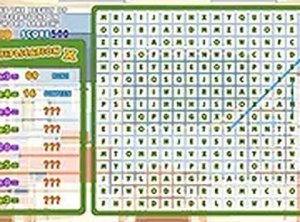
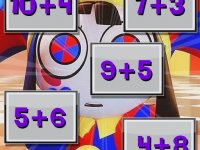
Each round of Math Letter Hunt begins with a math problem on screen. You calculate the numeric answer, then convert that number into its written word form. If the answer is 8, you need to find the letters that spell 'eight' hidden somewhere in a grid of random letters. The word can run in any direction, so you scan the grid carefully rather than reading it left to right. This two-step process means you are never just calculating or just searching; the puzzle only resolves when both steps are correct.
What the Game Trains
The format targets two separate mental skills at once. Repeated practice with addition, subtraction, multiplication, and division keeps basic arithmetic active, while finding the correct number word reinforces spelling that younger players often find tricky. Because the two tasks are interleaved, neither one feels like isolated drill work. The search element adds a visual, spatial layer that a standard worksheet cannot provide, and the arithmetic gives the search a purpose beyond simple pattern matching.
How Difficulty Changes
Early rounds use simple sums and smaller letter grids. As you progress, multiplication and division problems appear, and the grids become larger and more crowded. That combination raises the demand on both calculation accuracy and visual scanning. The pace is set by the player rather than a timer, so you can work through harder problems without external pressure. Each stage builds on the arithmetic and spelling skills practiced earlier, which gives the difficulty curve a clear direction instead of a random spike.
Interface and Availability
The interface keeps distractions low, with large readable fonts for the math problem and well-spaced letter grids. The game runs on desktop computers, tablets, and phones, and the touch controls respond accurately on mobile devices. A full-screen option is available for players who want a larger view. There are no advertisements or in-app purchases, and built-in hints are available when a puzzle stalls, so a session does not end in frustration over a single missed word.


Editorial Notes